

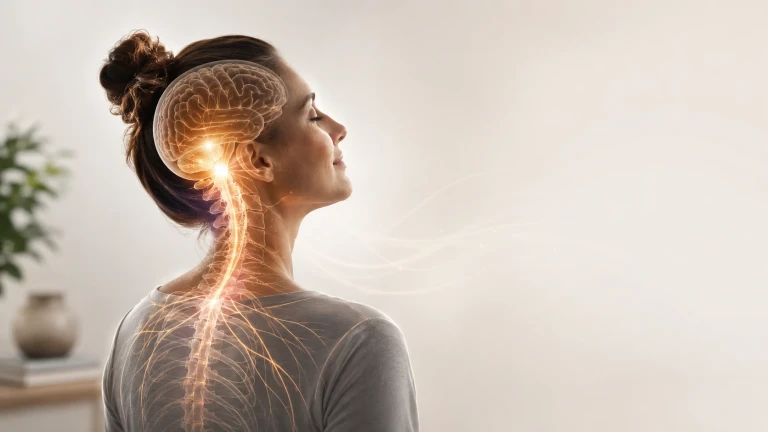
Nervous System Stress and Spinal Function
The nervous system is constantly working behind the scenes. It helps control movement, posture, balance, muscle tone, breathing, digestion, sleep patterns, and how the body responds to stress.
When life becomes physically, mentally, or emotionally demanding, the nervous system often responds before a person even realizes it.
This is why stress is not only something people “feel” emotionally. Stress can also show up physically through tight muscles, neck stiffness, headaches, poor sleep, fatigue, jaw tension, shallow breathing, and changes in posture.
For many patients searching online for answers, the question is not only, “Why am I stressed?” It is also, “Why does my body feel tense, stiff, guarded, or out of balance?”
One important place to look is the relationship between nervous system stress and spinal function.
How the Nervous System Responds to Stress
The autonomic nervous system helps regulate many automatic functions in the body. It includes the sympathetic nervous system, often associated with the “fight-or-flight” response, and the parasympathetic nervous system, often associated with “rest-and-digest” recovery.
This response is normal and necessary. The body needs to react quickly when there is a threat, pressure, pain, or demand. The problem begins when the stress response stays active for too long.
When the body remains in a heightened state, muscles may stay tense. Breathing may become more shallow. Sleep may become less restorative.
The body may begin to feel as if it is always bracing. Over time, this can influence how a person moves, sits, stands, and carries tension through the spine.
The Spine Is Part of the Stress Conversation
The spine is not just a structure of bones. It protects the spinal cord, supports posture, allows movement, and provides important sensory feedback to the nervous system.
When spinal motion becomes restricted or inefficient, the body may compensate with muscle guarding, stiffness, altered posture, and reduced range of motion.
This can become a cycle.
Stress increases muscle tension.
Muscle tension changes movement.
Changed movement affects spinal function.
Poor spinal function creates more stress on the body.

Patients often notice this as neck tightness, upper back tension, lower back stiffness, difficulty relaxing the shoulders, or feeling “locked up” after long workdays.
Some may also notice tension headaches, jaw tightness, or a sense that their posture keeps getting worse no matter how often they stretch.
Why the Upper Cervical Spine Matters
Upper cervical care focuses on the top part of the neck, especially the area around the atlas and axis, the first two bones of the spine.
This region is important because it sits close to the base of the skull and plays a major role in head position, neck motion, posture, and sensory communication.
The cervical spine contains important proprioceptive structures. Proprioception is the body’s ability to sense position and movement.
Research published through the National Institutes of Health notes that the cervical spine has a delicate proprioceptive system that plays a crucial role in posture and balance control.
When the upper neck is not moving well, the body may receive less efficient information about head position and spinal movement. This does not mean every symptom comes from the neck.
But it does mean the upper cervical spine can be an important area to evaluate when patients experience recurring neck tension, postural strain, headaches, stiffness, or balance-related complaints.
Nervous System Stress Can Change Posture
Stress often changes posture without a person noticing. The shoulders may rise. The head may move forward. The jaw may clench. The upper back may round. The neck muscles may stay active even at rest.
Over time, this postural stress can place more demand on the cervical spine. A forward head posture can increase strain on the muscles and joints of the neck and upper back.
When the body keeps repeating that position during computer work, phone use, driving, or poor sleep, the spine may begin adapting to the pattern.
Patients may describe this as:
“I always feel tight at the base of my skull.”
“My neck never fully relaxes.”
“I wake up stiff.”
“My shoulders are always tense.”
“I feel like my posture is getting worse.”
“I get headaches after sitting at my desk.”
These are common reasons patients search for chiropractic care, upper cervical care, neck pain relief, posture correction, or help with stress-related tension.

Upper Cervical Care and Spinal Function
Upper cervical chiropractic care is designed to evaluate alignment, movement, posture, and nervous system-related stress patterns in the upper neck.
The goal is to understand how the upper cervical spine may be affecting the way the body moves, balances, and adapts.
The American Chiropractic Association explains that a neck adjustment is a precise procedure applied to the joints of the neck, usually by hand, with the goal of improving spinal mobility and restoring range of motion.
In upper cervical care, the approach is often more specific and gentle. The chiropractor may assess head posture, spinal alignment, neck motion, muscle tone, neurological signs, and how the body compensates from top to bottom.
Care may include precise adjustments, posture guidance, ergonomic recommendations, movement strategies, and lifestyle advice to reduce repetitive stress on the spine.
Symptoms Patients May Notice
Nervous system stress and spinal dysfunction can look different from person to person. Some patients feel mostly physical symptoms. Others notice a mix of tension, fatigue, poor sleep, and reduced mobility.
Common concerns may include:
- Neck stiffness
- Upper back tension
- Head pressure or tension headaches
- Shoulder tightness
- Jaw tension
- Poor posture
- Reduced neck rotation
- Muscle guarding
- Feeling physically tense even when resting
- Trouble relaxing after stressful days
- Fatigue from chronic tension
- Recurring stiffness after desk work
These symptoms can have many possible causes. A proper evaluation is important, especially if symptoms are severe, new, worsening, or connected with dizziness, numbness, weakness, vision changes, trauma, or other concerning signs.
Why Patients Search for Answers Online
Many people begin searching because they feel something is “off,” but they do not know what to call it. They may search phrases like:
“Can stress cause neck pain?”
“Why is my neck always tight?”
“Can posture affect the nervous system?”
“Can upper cervical chiropractic help with tension?”
“Why do I feel stiff after stress?”
“Can spinal alignment affect how the body feels?”
“Why do I carry stress in my neck and shoulders?”
These questions matter because they reflect what patients are actually experiencing. They are not always looking for a complicated diagnosis. Often, they are looking for a clear explanation of why their body feels tense, guarded, and harder to move.
Supporting the Nervous System Through Better Spinal Function

A healthier spine does not eliminate life stress. But better spinal function may help the body move with less restriction, reduce unnecessary mechanical strain, and support more efficient posture and movement.
Upper cervical care may be one part of a broader plan that includes better sleep habits, hydration, movement, breathing exercises, ergonomic changes, strengthening, mobility work, and stress management.
Since chronic stress can affect many body systems, Mayo Clinic notes that long-term activation of the stress response may contribute to problems such as anxiety, digestive issues, headaches, muscle tension and pain, sleep problems, and memory or focus difficulties.
This is why care should look at the whole person, not just one painful area.
When to Consider an Upper Cervical Evaluation
An upper cervical evaluation may be helpful for patients who experience recurring neck tension, postural stress, stiffness near the base of the skull, limited neck movement, tension headaches, or a pattern of feeling physically guarded during stressful seasons.
The purpose of the evaluation is to identify how the upper cervical spine is moving, how the body is compensating, and whether spinal alignment or motion restriction may be contributing to the patient’s symptoms.
Care should always be individualized. The right approach depends on the patient’s history, examination findings, lifestyle, posture, daily stress load, and overall health picture.
Final Thoughts
Nervous system stress and spinal function are closely connected. Stress can change muscle tone, posture, movement, breathing, and recovery.
The spine, especially the upper cervical spine, plays an important role in posture, motion, and sensory communication with the nervous system.
When the body feels tense, stiff, guarded, or out of balance, it may be worth looking beyond the symptom and asking a deeper question:
How well is the spine helping the nervous system adapt?
Upper cervical care offers a focused way to evaluate the top of the spine and its relationship to posture, movement, and body balance.
For patients dealing with chronic neck tension, stress-related stiffness, or recurring postural strain, a careful upper cervical chiropractic evaluation may be an important step toward understanding what the body has been trying to communicate.
Ready to Learn What Your Body Is Trying to Tell You?
If you have been feeling tense, stiff, guarded, or out of balance, your nervous system and spine may be working harder than they should. Upper cervical chiropractic care looks closely at the relationship between the top of the neck, spinal alignment, posture, and nervous system function.
At our upper cervical chiropractic practice, we take the time to understand your symptoms, evaluate how your spine is functioning, and create a care plan based on your individual needs. The goal is not just temporary relief. It is to help your body move, adapt, and function with better balance.
If stress, neck tension, headaches, posture changes, or recurring stiffness have become part of your daily life, schedule a consultation with our office. We would be honored to help you take the next step toward feeling more comfortable, supported, and connected in your body.


Leave a comment