

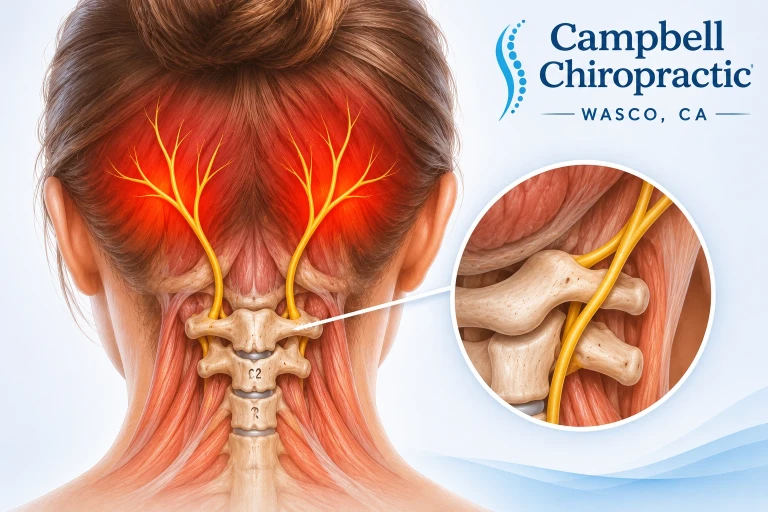
Experiencing sharp, shooting pain at the base of your skull? Does the pain travel toward the top of your head, behind your eyes, or along your scalp? These symptoms may be associated with a neurological pain condition known as occipital neuralgia.
Although several factors can contribute to occipital neuralgia, the relationship between the upper cervical spine, surrounding muscles, and occipital nerves deserves particular attention.
At Campbell Chiropractic in Wasco, California, Dr. Dennis Campbell specializes in Blair Upper Cervical Chiropractic, a precise approach to identifying and addressing upper cervical spinal dysfunction.
Understanding the connection between the upper cervical spine and occipital nerves may help individuals explore appropriate options for managing their symptoms.
What Is Occipital Neuralgia?
Occipital neuralgia is a neurological pain disorder involving irritation or dysfunction of the greater, lesser, or third occipital nerves. These nerves transmit sensory information from the upper neck and scalp to the central nervous system.
When an occipital nerve becomes irritated or compressed, individuals may experience intense, electric shock-like pain that travels from the base of the skull toward other areas of the head.
Common symptoms of occipital neuralgia include:
- Sharp, stabbing, or shooting head pain.
- Burning sensations around the back of the skull.
- Pain radiating toward or behind the eyes.
- Increased scalp sensitivity.
- Tenderness near the upper neck.
- Discomfort during certain head movements.
- Pain when brushing the hair or resting against a pillow.
Occipital neuralgia can affect one or both sides of the head and is sometimes confused with migraines or cervicogenic headaches.
Understanding the Upper Cervical Spine
The cervical spine consists of seven vertebrae, designated C1 through C7. The upper cervical spine specifically refers to the region involving the first two vertebrae, the atlas and axis.
The atlas (C1) supports the skull and facilitates head movement, while the axis (C2) provides a rotational foundation that allows the head to turn.
Together, these vertebrae form a complex biomechanical system involving muscles, ligaments, joints, blood vessels, and neurological structures.
The upper cervical spine also surrounds and protects the upper spinal cord, which transmits information between the brain and body.
Because of its mobility and anatomical complexity, this region can be affected by trauma, restricted joint movement, muscular tension, and degenerative changes.
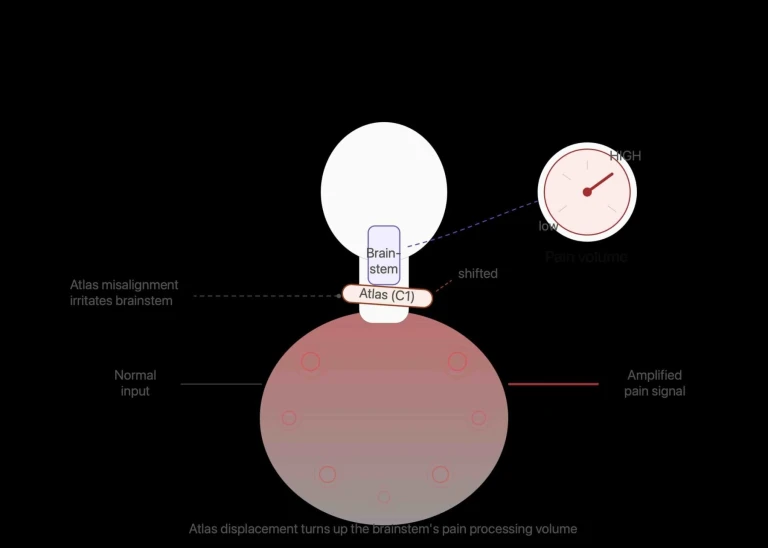
How Does the Upper Cervical Spine Affect Occipital Neuralgia?
The connection between the upper cervical spine and occipital neuralgia involves the anatomical relationship between cervical spinal nerves and the surrounding musculoskeletal structures.
The greater occipital nerve originates from the dorsal ramus of the second cervical spinal nerve (C2). It travels through several muscular layers before reaching the scalp.
The lesser occipital nerve primarily originates from C2, sometimes with contributions from C3, while the third occipital nerve originates from C3.
As these nerves travel through the upper neck, they pass near muscles, connective tissues, and cervical joints.
Muscular tension, degenerative joint changes, previous injuries, and other structural conditions may contribute to irritation or compression along these nerve pathways.
When this occurs, pain signals can travel toward the back and top of the head.
Can Upper Cervical Misalignment Contribute to Occipital Neuralgia?
Upper cervical chiropractic focuses on mechanical and positional relationships involving the atlas, axis, and surrounding structures.
When cervical movement becomes restricted, surrounding muscles may compensate, potentially contributing to additional tension and mechanical irritation.
Several factors may contribute to upper cervical dysfunction:
- Whiplash injuries and automobile accidents.
- Sports-related trauma.
- Falls and previous neck injuries.
- Prolonged forward head posture.
- Repetitive physical stress.
- Cervical osteoarthritis.
- Sustained neck muscle tension.
These factors may affect the tissues surrounding the occipital nerves.
Although cervical nerve compression and muscular entrapment are recognized contributors to occipital neuralgia, routine atlas misalignment has not been established as one of its most common causes.
A comprehensive examination is essential to determine whether upper cervical dysfunction is clinically relevant.
The Role of Muscle Tension and Inflammation

The suboccipital muscles are located immediately beneath the skull and help coordinate head movement and stability.
When these muscles become excessively tense or irritated, they may contribute to mechanical discomfort and, in certain circumstances, occipital nerve irritation.
Persistent muscular tension can also affect cervical mobility, creating additional stress throughout the neck and shoulders.
Inflammatory changes associated with injuries or degenerative conditions may further contribute to local tissue sensitivity.
Addressing these mechanical factors may be a useful component of conservative care when they are identified during an examination.
How Blair Upper Cervical Chiropractic May Help
Blair Upper Cervical Chiropractic is a specialized, non-invasive approach focusing on the anatomy and mechanical function of the upper cervical spine.
At Campbell Chiropractic, Dr. Dennis Campbell uses individualized assessment and targeted adjustments rather than conventional forceful neck twisting.
Potential objectives of upper cervical care include:
Improving Cervical Joint Mobility
Addressing restricted upper cervical movement may help improve neck function and reduce compensatory mechanical stress.
Reducing Muscular Tension
Improving cervical function may help surrounding muscles work more comfortably, potentially reducing associated neck discomfort.
Addressing Mechanical Sources of Irritation
Evaluating cervical joints and surrounding tissues can help identify musculoskeletal factors that may contribute to symptoms.
Supporting Natural Recovery
Conservative care aims to support comfortable movement and the body's existing mechanisms for physical recovery and pain regulation.
However, research has not established that Blair adjustments directly decompress occipital nerves or cure occipital neuralgia.
What Does Scientific Research Say?
A 2024 review published in Current Pain and Headache Reports examined conservative management approaches for occipital neuralgia.

The researchers identified a clinical rationale for incorporating manual therapy, therapeutic exercise, postural training, patient education, and other conservative interventions into multidisciplinary treatment plans.
However, additional condition-specific research is necessary to establish the effectiveness of individual treatments.
Research also suggests that manual therapy may benefit some patients with cervicogenic headaches. These findings are relevant to cervical musculoskeletal health but should not be interpreted as definitive evidence for treating occipital neuralgia.
Medical treatment options may include medications, occipital nerve blocks, and other pain management procedures.
Frequently Asked Questions About Occipital Neuralgia
Can C1 and C2 dysfunction contribute to occipital neuralgia?
Upper cervical dysfunction may contribute to mechanical irritation near occipital nerve pathways. The greater occipital nerve originates from C2, making this region anatomically relevant to the condition.
Can tight neck muscles irritate the occipital nerve?
Yes. Certain muscles along the occipital nerve pathway can contribute to nerve entrapment or irritation, potentially producing shooting pain and scalp sensitivity.
Can a chiropractor help with occipital neuralgia?
Upper cervical chiropractic may help address associated cervical joint dysfunction and muscular discomfort. Evidence specifically establishing its effectiveness for occipital neuralgia remains limited.
Is Blair Upper Cervical Chiropractic safe?
Blair Chiropractic uses controlled, targeted adjustments. However, cervical manipulation carries potential risks, including rare serious vascular or neurological complications. Appropriate screening and informed consent are essential.
When should I seek medical attention?
Persistent or unexplained head pain requires medical evaluation. Seek emergency care for sudden, severe headaches, vision changes, weakness, difficulty speaking, fever with neck stiffness, or new neurological symptoms.
Upper Cervical Chiropractic Care in Wasco, California
Living with occipital neuralgia and persistent neck discomfort can interfere with sleep, work, physical activity, and everyday life.
At Campbell Chiropractic, Dr. Dennis Campbell provides individualized Blair Upper Cervical Chiropractic care for patients throughout Wasco, Bakersfield, Shafter, Delano, Visalia, and surrounding California communities.
If cervical dysfunction is contributing to your discomfort, a comprehensive upper cervical examination may help determine whether conservative chiropractic care is appropriate alongside your medical treatment.
Schedule an appointment today to explore the relationship between your upper cervical spine, neck function, and overall well-being.
Campbell Chiropractic – Dr. Dennis Campbell, DC
620 E Street
Wasco, CA 93280
Phone: (661) 758-5131
Website: https://denniscampbelldc.com


Leave a comment