

When people first hear the term upper cervical chiropractic, they often assume it is simply another way of describing standard chiropractic care. While both approaches focus on the spine, joint function, and nervous system health, upper cervical chiropractic is distinct in several important ways.
The difference is not just about where the adjustment happens. It is about the level of precision, the type of assessment, the goals of care, and the way the doctor approaches correction.
For patients searching online for answers about neck discomfort, headaches, postural imbalance, dizziness, or recurring tension, understanding this difference can help them make a more informed decision about the kind of chiropractic care they may want to explore.
Understanding the Upper Cervical Spine
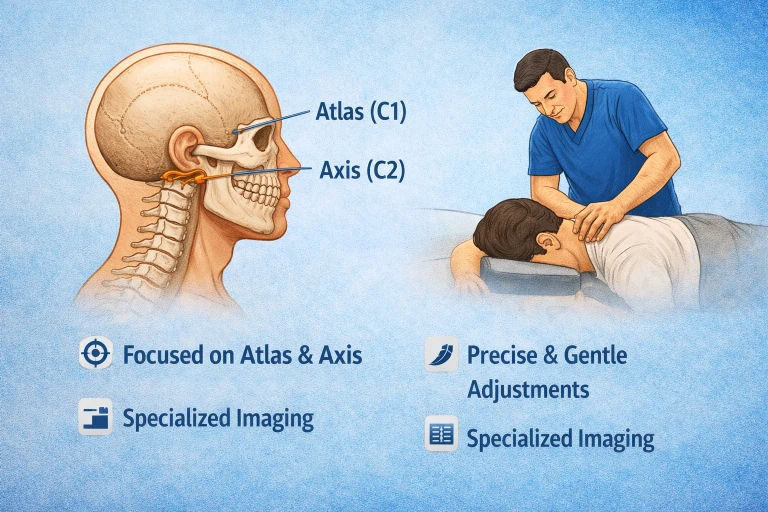
The upper cervical spine refers to the top two bones in the neck, called the atlas (C1) and axis (C2). These vertebrae are unique compared to the rest of the spine. They support the weight of the head, allow for a large range of motion, and sit in close relationship to the brainstem and central nervous system structures.
Because of this location, even small changes in alignment or movement in this area can have wider effects on posture, muscle balance, head positioning, and the way the body adapts to stress. Upper cervical chiropractors focus closely on this region because it is considered one of the most neurologically important areas of the spine.
What General Chiropractic Adjustments Usually Involve
In general chiropractic care, the doctor may evaluate and adjust multiple areas of the spine depending on where restriction, tension, or dysfunction is found. A visit may include adjustments to the neck, mid-back, lower back, pelvis, or even extremities such as the shoulders or hips.
This broader approach can be very helpful for many patients. It is often designed to improve mobility, reduce joint restriction, support musculoskeletal function, and address symptoms tied to different parts of the body.
General chiropractic adjustments are typically based on physical examination, palpation, range of motion findings, posture, orthopedic testing, and the doctor’s clinical judgment.

In many practices, care is full-spine and more generalized. The doctor may make several adjustments during the same visit to address multiple areas of mechanical stress.
What Makes Upper Cervical Chiropractic Different
Upper cervical chiropractic takes a much narrower and more specific focus. Rather than adjusting many areas of the body in the same visit, the upper cervical chiropractor concentrates primarily on the alignment and function of the top of the neck.
The philosophy behind this approach is that the upper neck plays a major role in how the head, spine, and nervous system work together. If there is a measurable problem in this region, the body may compensate below it. Instead of chasing those compensations throughout the spine, the goal is to analyze the upper cervical area carefully and correct it as precisely as possible.
That does not mean upper cervical care ignores the rest of the body. It means the doctor often sees the rest of the body through the lens of what may be happening at the top of the spine first.
Precision Is a Major Difference
One of the defining features of upper cervical chiropractic is precision. These practices often use highly detailed measurements, imaging, and analysis to determine whether the atlas or axis has shifted in a way that may affect balance and function.
Rather than applying a generalized adjustment based only on feel, upper cervical chiropractors commonly rely on:
- detailed postural analysis
- spinal balance assessment
- leg length or body symmetry findings
- focused palpation
- specialized upper cervical imaging or X-ray analysis
- in some offices, advanced imaging such as CBCT for structural detail
This level of analysis helps the doctor calculate the direction, angle, and force of the correction with greater specificity. The adjustment is usually designed for the individual patient rather than delivered as a broad, repeated maneuver.

The Adjustment Style Is Often Gentler
Another major difference is the style of the adjustment itself. Many people associate chiropractic with twisting, popping, or multiple rapid movements. In upper cervical chiropractic, the correction is often much more gentle and controlled.
Depending on the technique used, the patient may lie on their side, sit, or rest in a very specific position while the doctor applies a targeted correction to the upper neck. Some upper cervical techniques use a light hand contact. Others use a specialized instrument. In many cases, there is little or no twisting involved.
This is one reason patients who are nervous about traditional neck manipulation often look into upper cervical care. The adjustment is usually very specific and not based on force alone. The emphasis is on accuracy rather than intensity.
Fewer Adjustments, More Monitoring
In general chiropractic offices, it is common for patients to receive adjustments regularly, sometimes to several spinal regions in the same visit. In upper cervical care, there is often a stronger emphasis on checking whether an adjustment is needed before performing one.
That means a patient may come in, be re-evaluated, and not receive an adjustment every time. If the upper cervical correction is holding and the body is adapting well, the doctor may decide that no new correction is necessary at that visit.
This “adjust only when needed” model is one of the reasons upper cervical chiropractic stands out. The goal is not just to perform an adjustment. The goal is to help the body maintain correction and stability over time.
Why Patients Seek Upper Cervical Chiropractic
Patients often search for upper cervical chiropractic when they are dealing with persistent or recurring issues that do not seem fully explained by the lower spine or local muscle tension alone. These may include:

- recurring headaches or migraines
- neck stiffness and tension
- dizziness or balance concerns
- postural imbalance
- jaw tension
- pressure at the base of the skull
- discomfort after old injuries or whiplash events
- a sense that the body keeps drifting back into the same pattern
Many are drawn to the approach because it is focused, measured, and individualized. They want more than symptom relief. They want to understand whether a structural issue at the top of the neck is contributing to the bigger picture.
Is Upper Cervical Better Than General Chiropractic?
This is a common question, and the best answer is that they are different, not automatically better or worse. Both forms of chiropractic care can be valuable. The right fit depends on the patient’s condition, goals, preferences, and the doctor’s clinical skill.
General chiropractic may be the right choice for someone who needs broader support for spinal mobility, low back function, athletic recovery, or multiple mechanical complaints across the body.
Upper cervical chiropractic may appeal more to someone who wants a focused analysis of the top of the neck, especially if they have recurrent head and neck issues, postural imbalance, or a history suggesting the upper cervical area deserves closer attention.
The key is not choosing the most popular label. It is choosing the approach that best matches the patient’s needs.
Final Thoughts
Upper cervical chiropractic is different from general adjustments because it centers on a highly specific area of the spine, uses detailed analysis, and emphasizes precision over broad correction.
While general chiropractic often addresses multiple regions of the body in one visit, upper cervical care focuses on the atlas and axis with the belief that proper alignment there may influence the body more globally.
For some patients, that focused approach is exactly what they have been looking for. For others, general chiropractic care may be the better match. What matters most is understanding the difference and choosing care based on thoughtful evaluation rather than assumption.
If you have been wondering why some chiropractic practices talk specifically about the upper cervical spine, the answer is simple: the approach is more specialized, more measured, and more centered on precision than the average general adjustment model.



Leave a comment